
US 281 Highway Improvements & Karst Resource Management
Project Overview and Objectives
The US 281 improvement project involved expanding a major roadway in northern Bexar County, Texas—an area with significant environmental and regulatory challenges. The project required 79 acres of new right-of-way and over 1,500 acres of total impact due to subsurface excavation within critical habitat for federally listed endangered karst invertebrates, triggering complex permitting under the Endangered Species Act.
Zara led the effort to meet regulatory requirements and minimize environmental impacts, enabling this long-stalled infrastructure project to move forward.
The Challenge
The US 281 project presented significant environmental challenges due to its location within sensitive karst terrain, which is home to federally listed endangered species and their critical habitats. Past attempts at this project since the mid-1980s faced public perception issues, including misinformation. Specific complexities for this iteration included:
Compliance with ESA for three listed karst Invertebrates
Mitigating water quality impacts from 118 acres of new impervious cover
Minimizing impacts to subterranean ecosystems and nutrient cycles
Overcoming public opposition rooted in past failed attempts (since the 1980s)
Assisting with management of right-of-way acquisition from 120 parcels and displacement of 21 commercial properties
Zara’s Contribution and Innovative Approach
Through a series of contract engagements, TxDOT relied on Zara throughout the project's life cycle, ensuring continuity, compliance, and conservation success. The project efforts outlined below showcase Zaras’ broad range of services:
Environmental Documentation
Zara supported Jacobs Engineering on the Environmental Impact Statement (EIS) by authoring the Karst Invertebrate Technical Report and contributing to the Biological Assessment. This work supported ESA consultation and led to a Biological Opinion and Incidental Take Statement from USFWS, allowing the project to proceed with full compliance.
Karst Surveys & Genetic Mapping
Our team surveyed 1,390 acres, documented 116 karst features, and conducted presence/absence surveys. Zara collected Cicurina spiders from 83 caves, contributing to a major genetic mapping study that reclassified two species. This work improved identification methods and informed future ESA decisions. Zara later collaborated with karst expert, Dr. George Veni, to revise distribution maps and refine boundaries for 35 karst species, six formal Karst Fauna Regions (KFRs), and Karst Zones 1–4. Delineated drainage basins for caves in designated Critical Habitat Units (CHUs) and co-authored the Stone Oak Park North Karst Management Plan.
Construction Monitoring and Stakeholder Engagement
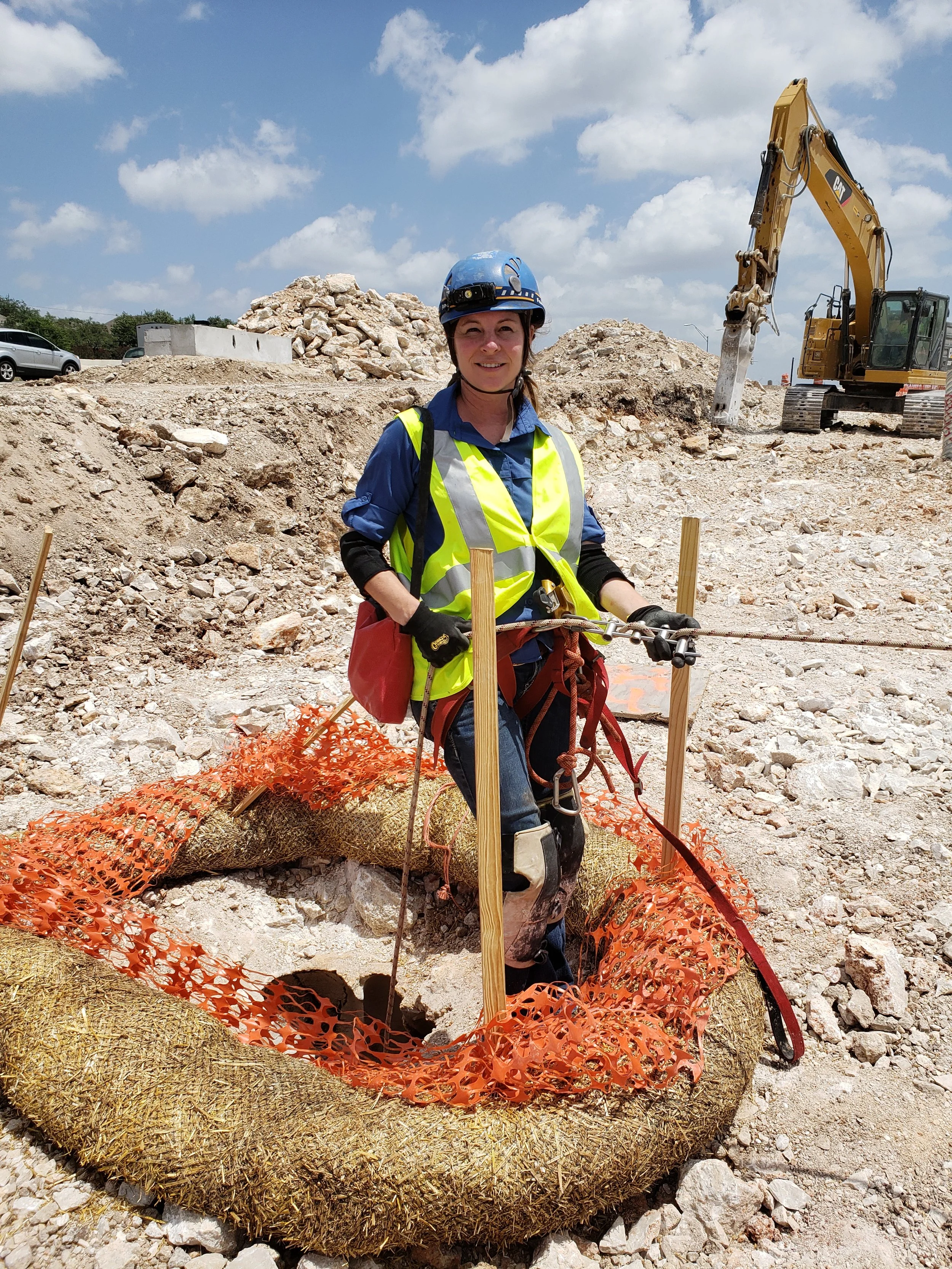
During construction monitoring, the team developed contractor training and karst discovery protocols. We responded to 72 subsurface voids, performing habitat assessments and ESA-compliant surveys. Zara’s USFWS-permitted biologists and professional geologists ensured all TCEQ and void closure protocols were followed without construction delays.
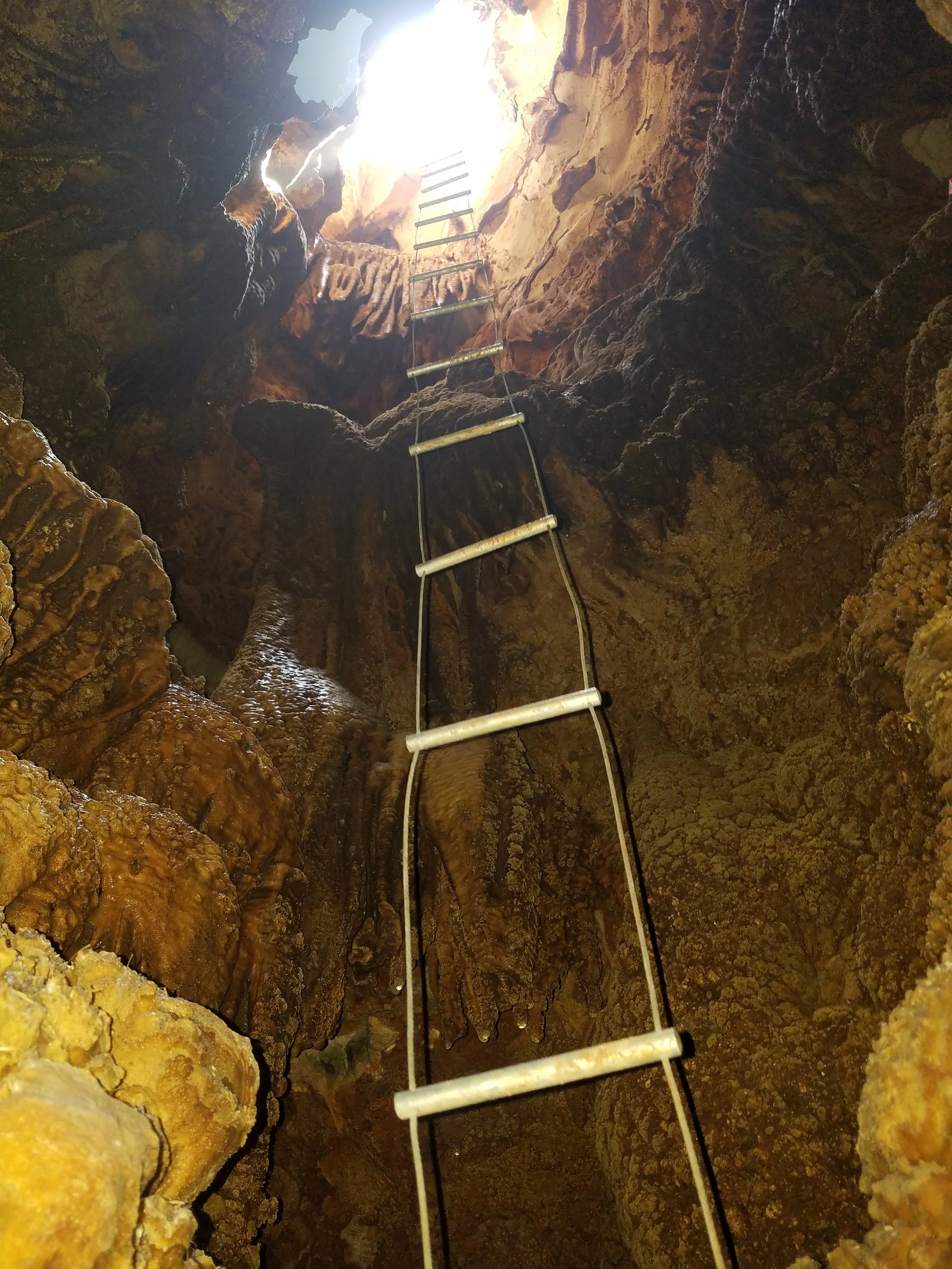
When human remains were discovered in a vertical cave, Zara led technical rope access, forensic coordination, and culturally sensitive stakeholder engagement with 12 Tribal Nations, ensuring respectful and legally sound reinterment.
Project Success
With Zara’s leadership, TxDOT achieved full ESA compliance and received a “not likely to jeopardize” determination for all three listed species. This project, once delayed for decades, moved forward with minimal disruption and a high level of environmental integrity. Zara’s proactive coordination, responsive field support, and applied research turned a high-risk regulatory challenge into a successful, construction-ready outcome.

Our impact
Through data collection and refinement of the regional karst habitat boundaries, Zara delivered tools that enhance habitat predictability and reduce uncertainty in future project permitting.
Zara’s blend of consulting expertise and applied research not only addresses immediate regulatory challenges but also provides the scientific foundation for more effective future planning.