
A Project Manager’s Guide toFreshwater Mussel Surveysin Central Texas
If your project may impact a perennial waterbody in Central Texas, you may need to complete a mussel survey before proceeding. This guide walks you through what to expect so you can meet compliance requirements while keeping your project on schedule.
Download the PDF GuideWhen a Freshwater Mussel Survey Is Required
In most cases, freshwater mussel surveys are triggered by other permits:
- The USACE Section 404 permit triggers a federal nexus that brings Endangered Species Act coordination into play.
- Under the Texas Parks and Wildlife Code, wildlife is considered property of the state, meaning protections can apply even if species are not state-listed as threatened or endangered.
Common Regulatory Agencies Involved
- US Fish and Wildlife Service (USFWS)
- Texas Parks and Wildlife Department (TPWD)
- US Army Corps of Engineers (USACE)
Timing & Seasonality
Mussel surveys generally must be conducted April through November, when water temperatures are at or above 50°F. This window aligns with mussels’ reproductive cycles, when they are most detectable, and protects them from an increased risk of mortality due to handling stress associated with cold water temperatures.
Estimated Project Timeline and Cost:
Estimated Timeline
(with reporting)
minimum
Estimated Cost
iNote: Timelines and costs can vary widely depending on project specifics. Zara provides detailed estimates with every proposal.
What to Expect from a Freshwater Mussel Survey
Timing and seasonality constraints create a limited timeframe and high demand for freshwater mussel surveys. To ensure your survey can be completed in the upcoming season, plan to coordinate with an environmental consultant by January or February whenever possible.
Surveys remain valid for two years, so if you anticipate projects within that period, it’s not too early to start the conversation.
No two mussel survey projects are identical, but most follow a standard six-phase timeline.
Your Responsibilities During the Survey
Client responsibilities are minimal once a mussel survey project begins. Your most important job is to secure environmental consulting services well in advance of the April-November mussel survey season (ideally no later than March of the year you wish surveys to be completed). Simply provide your environmental consulting partner with the project information: specifically, a detailed description of the planned work and a KMZ of the work area directly impacting the waterway. They’ll manage the project from that point forward.
Key Considerations
What factors impact the scope, timing, and cost of freshwater mussel surveys?
- Presence of federally listed species: If federally listed species are found and the project enters formal or informal consultation with USFWS, it can add several months to the project timeline.
- Stream grouping: Five stream groupings across the state determine what type of habitat assessment or survey is required. Ungrouped perennial streams, at minimum, will require a habitat assessment and/or survey.
- Area of direct impact: The bigger the project’s footprint in the waterway, the larger the survey area will be. Site conditions (e.g., a small wadeable stream vs a deep, fast-moving river) are also a consideration.
- Seasonal constraints: Schedule your survey to occur within the April to November window. Exceptions or extensions may be possible, but planning within the standard timeframe is strongly recommended as offseason survey approval by TPWD and USFWS is not guaranteed.
Choose Zara Environmental for Your Freshwater Mussel Survey
- Nearly 100 freshwater mussel surveys completed, including numerous surveys for Texas Department of Transportation (TxDOT).
- Experts in the field, including multiple permitted biologists, extensive knowledge regarding freshwater mussel habitat assessments, habitat associations, and impact analyses.
- End-to-end project support, from agency coordination and permit approval through relocation and reporting.
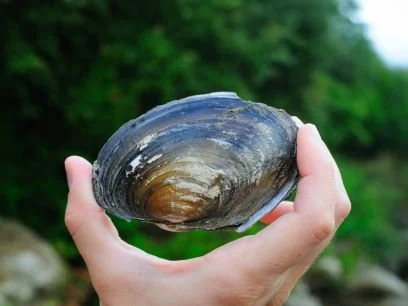
Zara Environmental has a proven track record of executing complex environmental conservation efforts under extreme conditions, setting new benchmarks for freshwater mussel relocation success. Through a proactive approach, comprehensive capabilities, and strong relationships with regulatory agencies, we help clients anticipate constraints, reduce risk, and maintain project schedules.