
Dam Stabilization in Sensitive Aquatic habitat
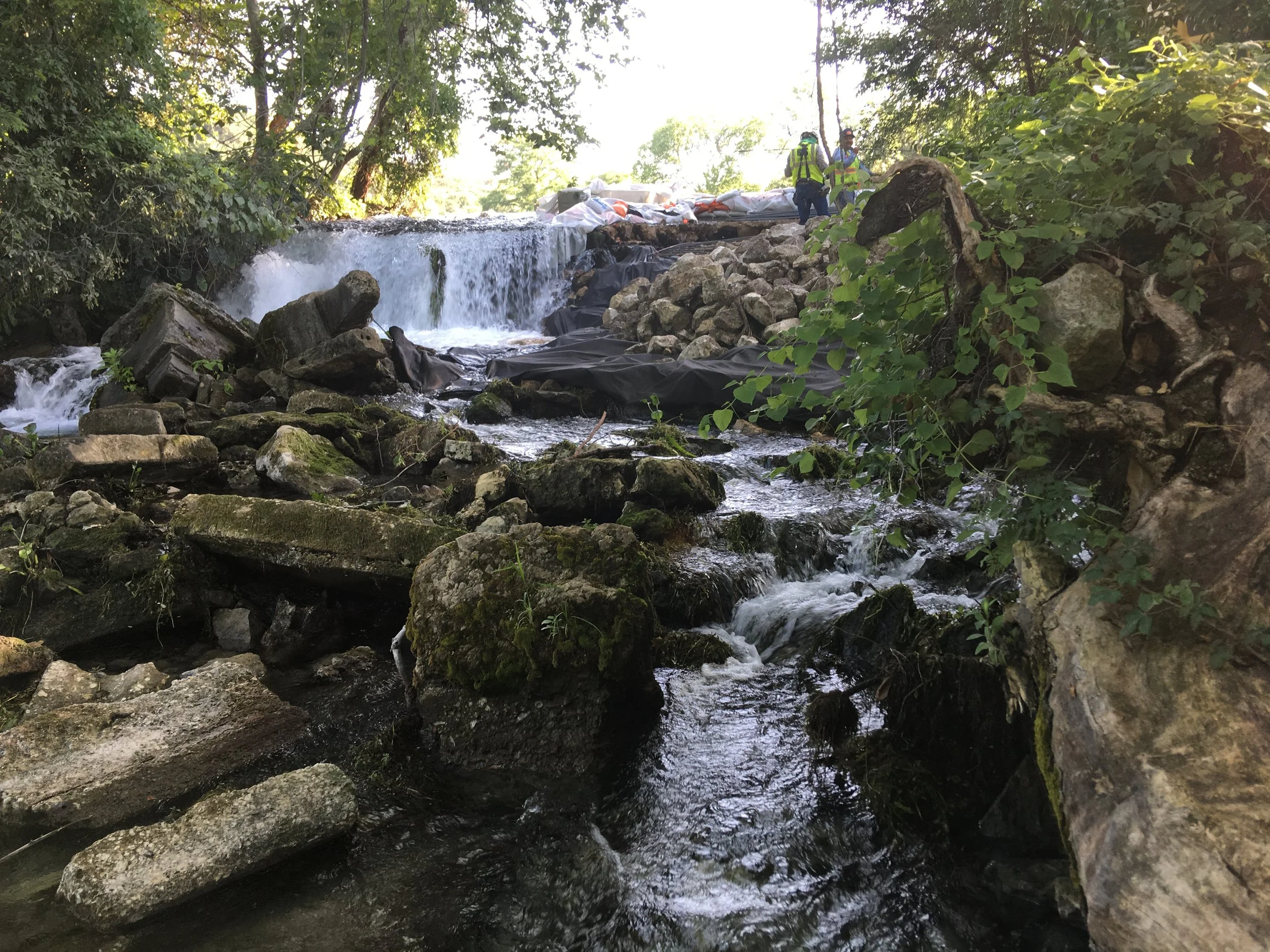
Project Location:
San Marcos River
Hays County, Texas
Year Completed:
2019
Project Partners:
Texas State University
Freese and Nichols, Inc.
Project Type:
Water Infrastructure
Spring Lake Dam Stabilization
Project Overview & Objectives
Texas State University undertook emergency stabilization repairs to Spring Lake Dam on the San Marcos River in San Marcos, Texas. Freese and Nichols retained Zara Environmental to provide construction-phase biological monitoring and protected species compliance for work occurring within proposed critical habitat for federally listed aquatic species.
The emergency repairs required implementation of conservation measures established in a U.S. Fish and Wildlife Service Biological Opinion. Zara provided the permitted biological expertise needed to carry those measures into the field, protect sensitive aquatic habitat and listed species, and respond to changing conditions as in-water construction progressed.
Services Provided
Aquatic Resource Relocation Plan (ARRP)
Protected species relocation
Permitted biological monitoring
Water quality and aquatic habitat monitoring
Construction BMP monitoring
Adaptive management during construction
Contractor and agency coordination
Daily compliance reporting
Results & Project Impact
Before disturbance, Zara surveyed active work areas and relocated federally listed San Marcos salamanders (Eurycea nana) and Fountain Darters (Etheostoma fonticola) to protected habitat. During construction, biological monitors performed daily water quality and habitat monitoring, monitored spillway flows and BMPs, documented species impacts and field activities, and coordinated directly with contractors and project partners. Zara also facilitated coordination that allowed USFWS personnel to opportunistically collect listed species for refugia populations.
As construction conditions changed, Zara worked with the contractor to adapt or add protective measures, including turbidity curtains and mulch logs to minimize sediment and grout migration. Continuous on-site biological oversight helped translate the Biological Opinion's conservation measures into practical construction controls, allowing emergency stabilization work to proceed while maintaining protection of federally listed species and sensitive San Marcos River habitat.
